SORTED STREAMS. RATED FRAMES. NOTHING ON THE FLOOR.
Recyclers, scrap yards, e-waste processors and waste contractors live or die on separation and handling speed. Heavy-duty steel cages hold sorted metals, cardboard, plastics, batteries and strip-out waste in rated frames that stack, fork from all sides and fold flat for the return run. Designed, tested and shipped across Australia & New Zealand.
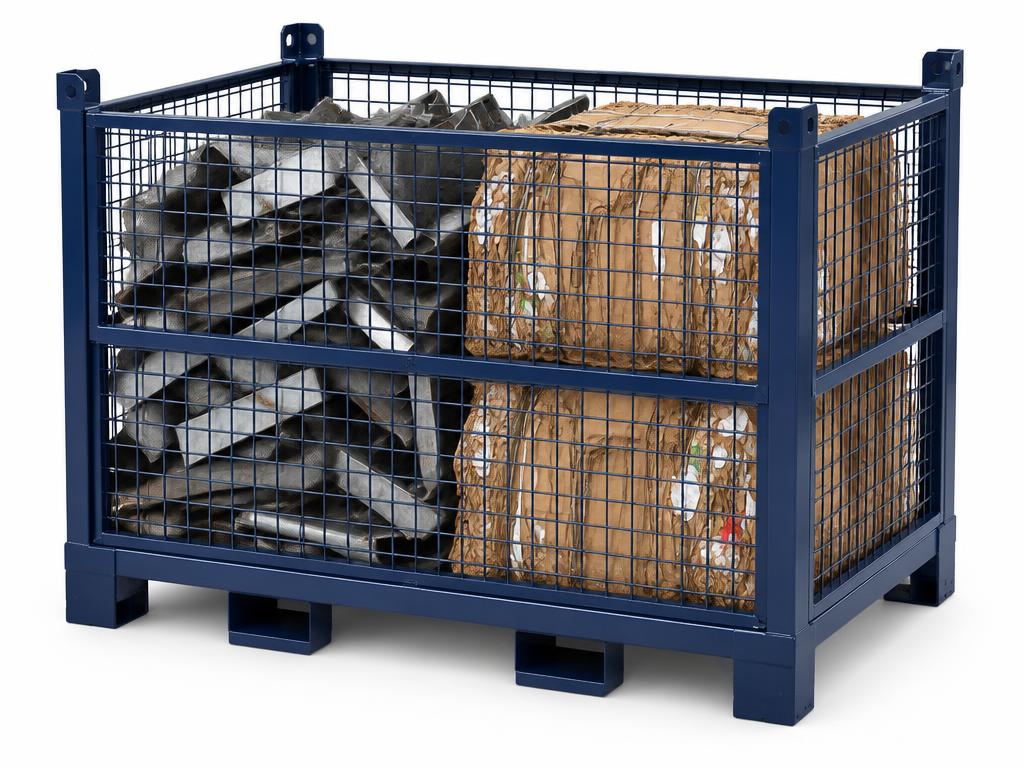
Built for sorted material and site waste
Sorted scrap metal
Steel offcuts, copper, brass and aluminium stay separated by grade in rated cages instead of piled on the yard floor, so the load that goes to the weighbridge is the load you sorted.
Cardboard & plastics
Baled cardboard, film and rigid plastics sit contained in mesh frames that stack, so a sorting floor holds more without spilling into the aisles.
E-waste & batteries
Boards, cable, screens and batteries are high-value and need handling discipline. Cages with dividers keep streams apart, counted and traceable through the process.
Strip-out & site waste
On demolition and refit jobs a cage doubles as a waste crate — off-cuts, packaging and strip-out material go in on site and fork straight onto the truck.
Process line staging
Feed the shredder, granulator or press from cages staged beside the line, then swap a full frame for an empty one without stopping the run.
Colour-coded streams
Colour, plates and numbering can be set per stream on volume runs, so a cage says at a glance which material, grade or customer it belongs to.
Separation you can see. Loads you can rate.
Streams stay separated
Contamination costs money at the weighbridge. Rated frames keep each grade in its own container from the sort floor to the buyer.
Rated for dense loads
Scrap and baled material are heavy for their size. Heavy cages are rated so you load to a known limit instead of hoping.
Nothing on the floor
Loose piles spread, trip staff and block forklift paths. A frame holds the pile square inside a footprint you can plan around.
Reusable, not single-use
Steel frames run for years — no bulka bags or stretch wrap heading back into the waste stream you are trying to reduce.
Stacks without racking
Loaded cages interlock and stack, so a sorting shed gets more capacity with no racking to install or bolt down.
Folds flat for returns
Empties fold flat, so a collection run returns roughly four times the frames it dropped off at customer sites.
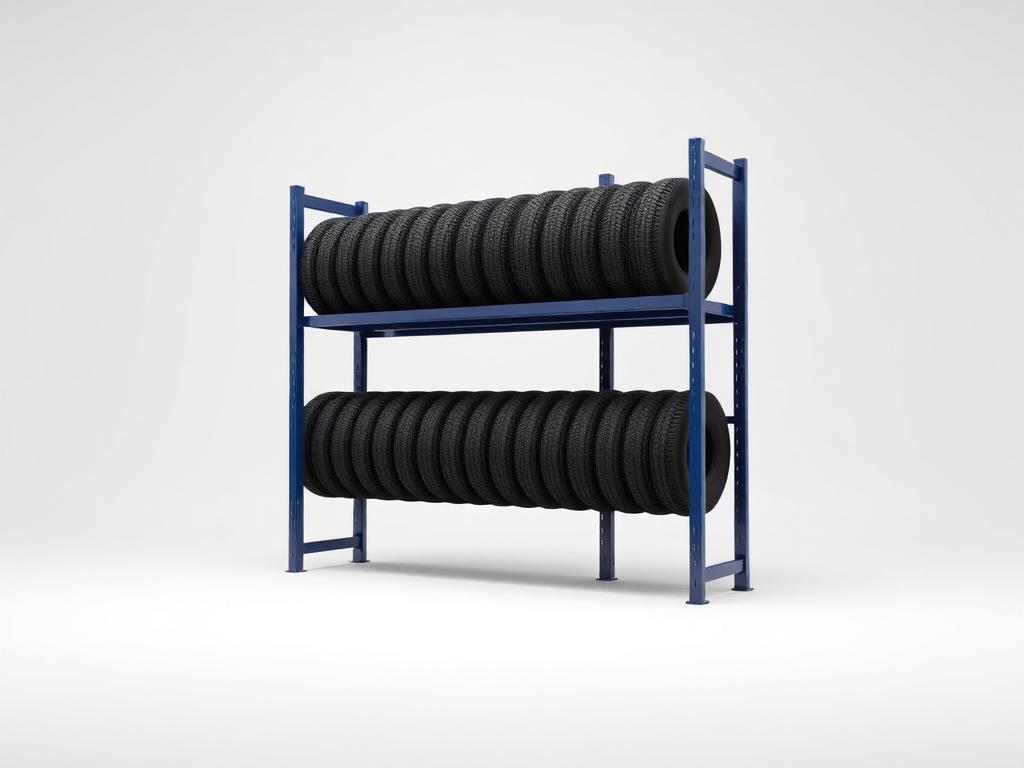
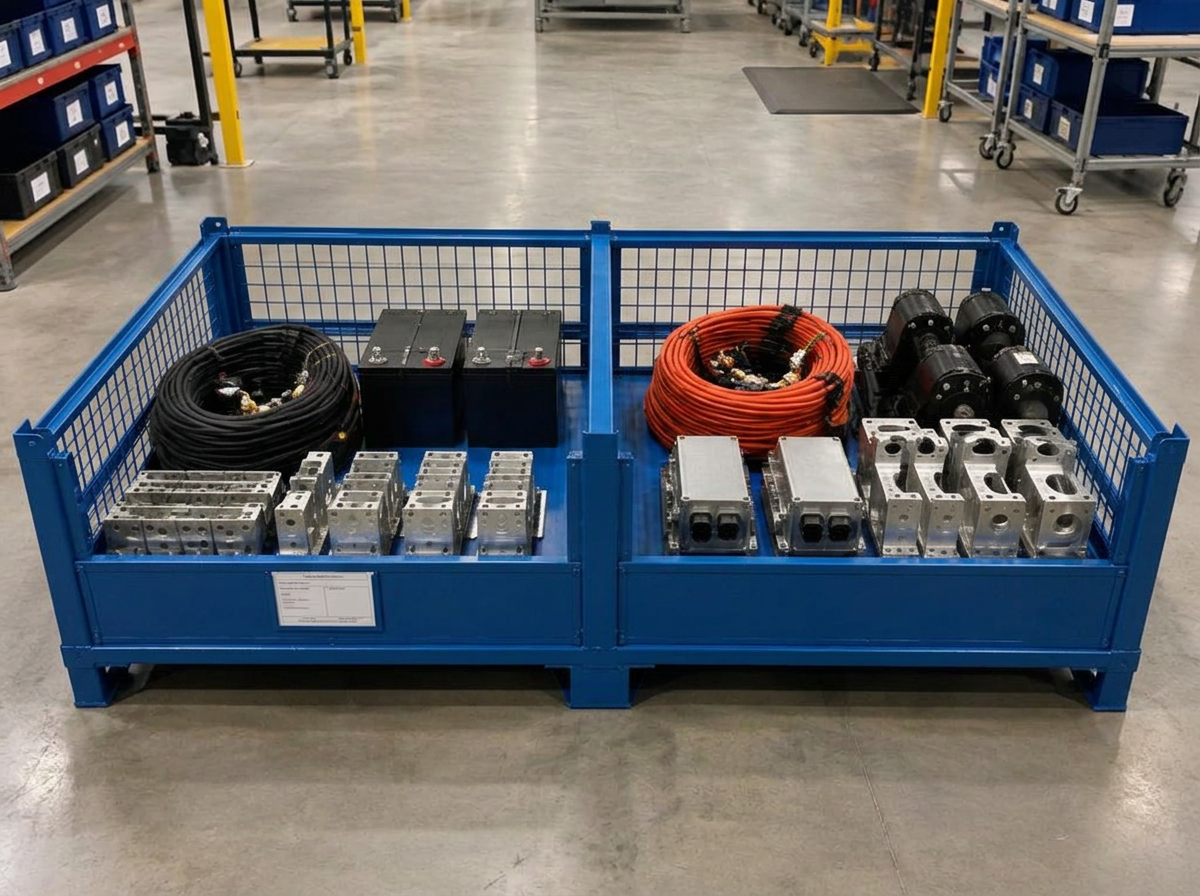
Rated frames for dense, mixed and divided loads
| Size | Footprint | Safe load | Typical use |
|---|---|---|---|
| Heavy cage | 1,200 × 1,200 mm | 2,000 kg | Scrap metal, dense grades, bales |
| Standard cage | 1,165 × 1,165 mm | 1,000 kg | Cardboard, plastics, mixed recyclables |
| Divided cage | 1,165 × 1,165 mm | 1,000 kg | Two streams in one footprint |
Recycling storage — questions we get asked
Tell us the streams you sort, the bulk densities you handle and where cages travel to. We spec the frame, divider and coating around the material, not the other way round.
Are the cages rated for scrap metal?
The heavy cage is rated to 2,000 kg, which suits dense sorted metals and baled material. Tell us the grades and bulk densities you handle and we match the frame to the heaviest load you will put in it.
Can one cage handle two material streams?
Yes. A centre upright divider splits the frame in two, so two grades or two customers share one footprint without cross-contamination.
Can they be colour-coded by stream?
Yes, on volume runs. Colour, plates and permanent asset numbering can be set so a cage is instantly identifiable as metal, e-waste, cardboard or a specific customer's frame.
Can we track cages out at customer sites?
Asset numbering is standard on volume runs, and NFC, RFID or QR plates can be fitted so frames scan in and out of sites and depots.
Do they hold up outdoors in a yard?
They are painted in a hard-wearing RAL powder coat as standard, with a heavier-duty coating available for frames that live outdoors and get washed down.
Can a cage be used as a waste crate on site?
That is one of the most common uses. Strip-out material, packaging and off-cuts go into the cage on site, and the whole frame forks onto the truck instead of being shovelled into a bin.
How do they travel?
Frames are forkable from all sides and load two high in a truck, so a collection run moves more material per trip and unloads in fewer lifts.
Do you build custom sizes for a process line?
Custom solutions for your unique requirement are available for bulk orders. Send the material, bulk density and how the frame is filled and emptied, and we spec around it.
Get recycling cages priced
Send your streams, load weights and fleet quantities. We quote within one working day.