CASED WINE, KEGS & GLASS. STACKED, NOT WRAPPED.
Wineries, breweries, bottling lines and beverage distributors move heavy, fragile stock in short, sharp seasons. Foldable steel stillages hold cased wine, bottles, kegs, closures and dry goods square and off the floor, stack up to six high without racking, and fold flat for the return leg. Designed, tested and shipped across Australia & New Zealand.
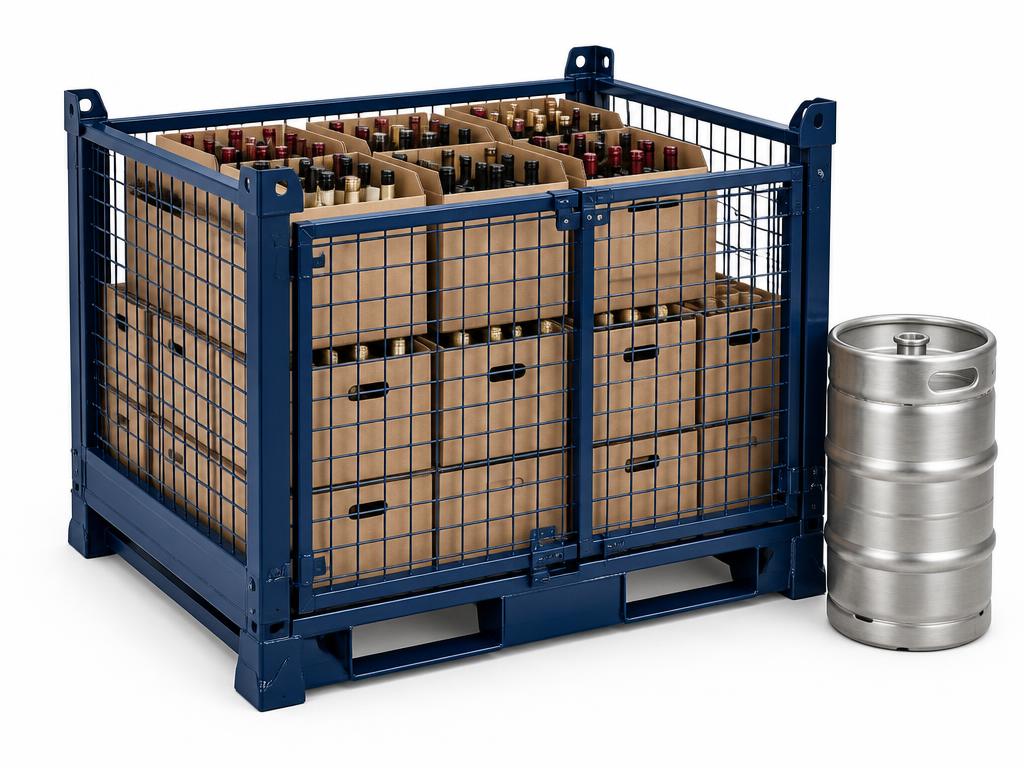
Built for beverage stock and packaging
Cased wine & bottles
Cartons of cased wine stack square inside a steel frame instead of leaning on shrink wrap. The frame carries the stacking load, so the bottom cases stay crush-free and the column stays stable in the store and on the truck.
Kegs & returns
Kegs roll, walk and damage floors when they travel loose. In a cage they stay contained, counted and forkable — out to venue, back to the brewery as one unit.
Empty glass & closures
Empty bottles, caps, corks and screw closures ride in mesh cages that keep dust out of the packaging line and put an accurate count on every frame.
Bottling line feed
Stage labels, cartons, dividers and closures beside the line in stillages, then fork the empties out and the next run in. No re-stacking pallets mid-shift.
Vintage surge storage
Vintage doubles your stock for a few weeks a year. Stillages stack up to six high with no fixed racking to install, then fold flat when the season ends.
Cellar door & events
Fork pockets and a square frame make a cage easy to load, tie down and transport to markets, shows and cellar-door events, then return stacked and empty.
Steel takes the load. The stock stays saleable.
No crushed bottom cases
Wrapped pallets put every stacked pallet's weight on the cartons below. Steel frames take the load, so the bottom layer arrives saleable.
No cutting wrap at pick
Drop the gate, pick the case, close the gate. Nothing to slice open and no film to clear off the floor.
Accurate counts
A cage holds a known quantity, so cycle counts and stocktakes at vintage read off the frame, not off a guess.
Reusable, not single-use
Steel cages run for years. Every trip is one less roll of stretch wrap heading to landfill — a real line in a sustainability report.
Stacks without racking
Loaded frames interlock and stack, so a shed flexes with the vintage instead of being locked into fixed racking.
Folds flat for returns
Empties fold flat in seconds, so a truck brings back roughly four times the stillages it delivered.
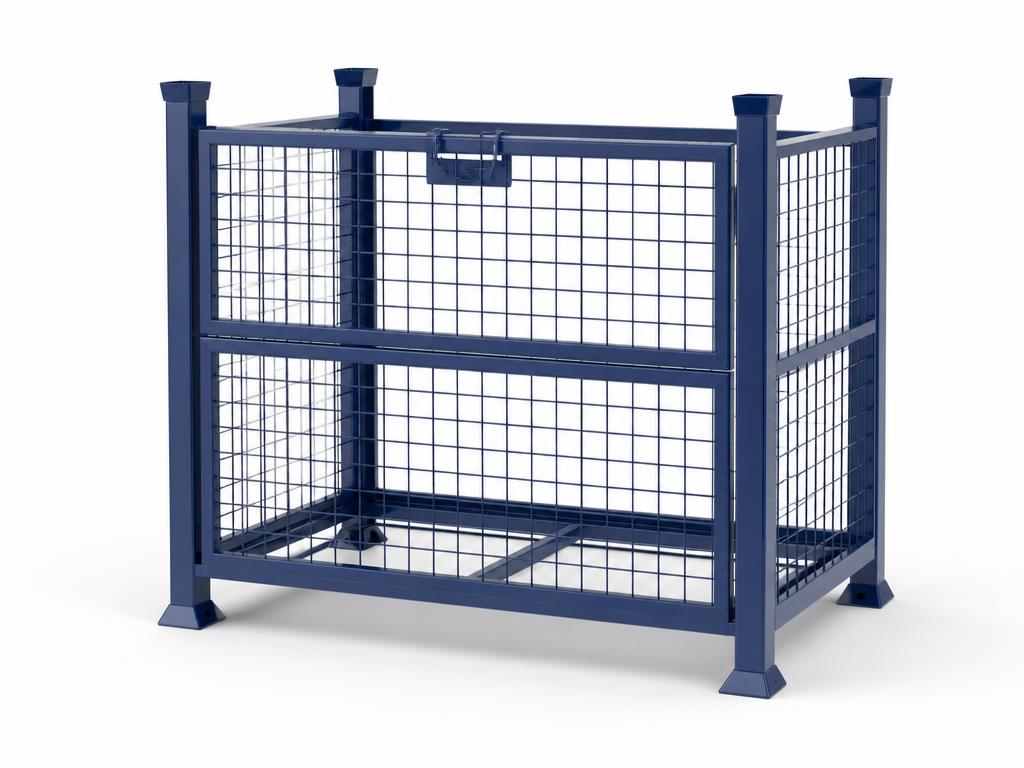
Three footprints for cellar, line and distribution
| Size | Footprint | Safe load | Typical use |
|---|---|---|---|
| Pallet cage | 1,165 × 1,165 mm | 1,000 kg | Cased wine, closures, dry goods |
| Heavy cage | 1,200 × 1,200 mm | 2,000 kg | Kegs, bulk glass, filled cartons |
| Half-height cage | 1,165 × 1,165 mm | 1,000 kg | Line-side picking & consumables |
Beverage storage — questions we get asked
Tell us what you bottle, how it is picked and where the empties go back to. We size the frames around your vintage, your line and your distribution run.
Can stillages handle filled wine cartons safely?
Yes. The steel frame carries the stacking load rather than the cartons, so filled cases at the bottom of a column are not crushed by the weight above. Rate the cage to your heaviest filled pallet and stack within the rated limit.
Are they suitable for kegs?
Yes. Kegs travel best contained — a heavy-duty cage holds them square, stops them rolling in transit and forks in and out as one unit, which also protects venue and cellar floors.
Do they work in a cold or damp cellar?
They are painted in a hard-wearing RAL powder coat as standard, with a heavier-duty coating available for damp cellars, wash-down areas and exposed yards.
Can we run them as a returnable fleet to distributors?
That is exactly what they are built for. Frames fold flat for the return leg, and colour, plates and asset numbering can be set on volume runs so cages track back to a branch, customer or hire fleet.
How many stack high?
Loaded cages interlock and stack up to six high depending on the load and the frame, which turns vertical space into storage without installing racking.
Will they fit our existing forklifts and pallet jacks?
Frames are forkable from all sides on standard pallet footprints, so existing forklifts, reach trucks and jacks handle them without attachments.
Can they be food and beverage friendly?
Tell us the contact requirements and wash-down regime for your line and we spec the mesh, base and coating to suit. Packaging, closures and cased goods are the usual applications.
Do you build custom sizes for our bottling line?
Custom solutions for your unique requirement are available for bulk orders. Send the footprint, load and how the frame is loaded and picked, and we spec around it.
Get beverage stillages priced
Send your case, keg or glass volumes and your peak-season quantities. We quote within one working day.