JIGS . PARTS . TOOLS . MATIERALS . READY FOR TO ROLL .
Kit every part for a job into one steel cage or four-post stillage and it arrives at the cell complete — loose parts, sub-assemblies and the special tooling that goes with them. Operators build instead of hunting for parts, work in progress stays countable, and the same frame ships the finished run. Designed, tested and shipped Australia-wide.
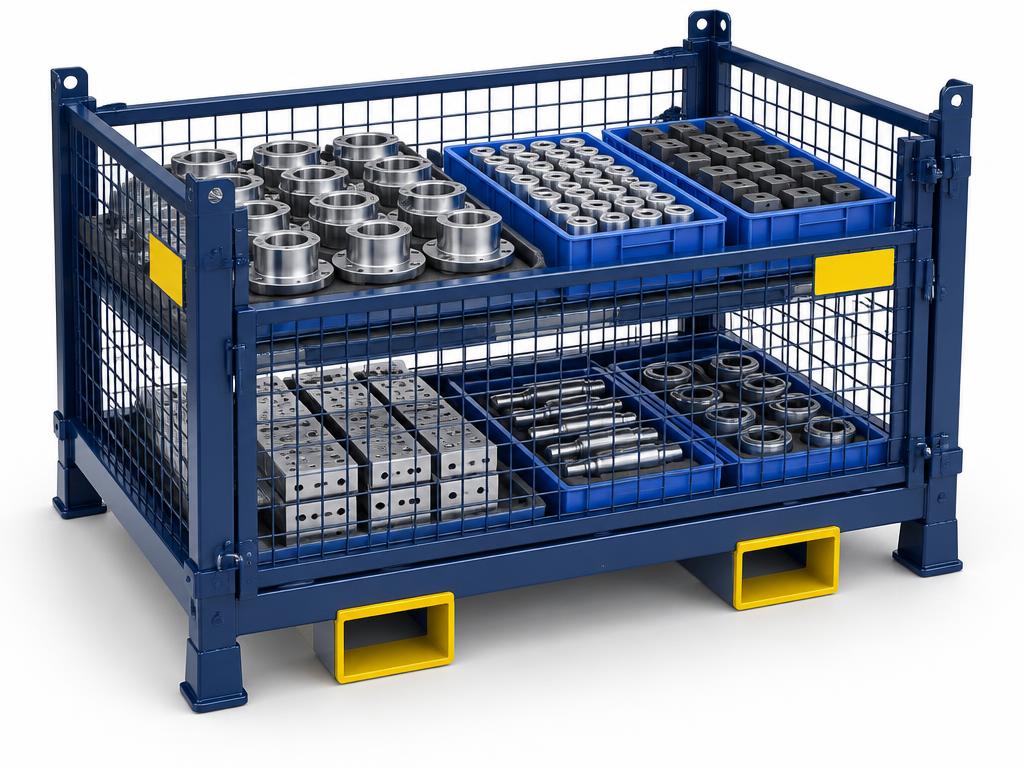
One place for every part. Less searching, more building.
Job kitting
One cage equals one job or batch. Pick and stage it once, then deliver it to the cell complete — components, fasteners and sub-assemblies arrive together, so operators build instead of hunting for parts.
Loose parts storage
Loose machined parts, fittings, brackets and hardware held in a mesh cage or four-post stillage instead of scattered across benches and bins — countable, visible and forkable straight to the line.
Special tooling
Jigs, fixtures, dies and change-over tooling stored with the job they belong to, protected in steel and back on the shelf after the run. No missing tooling, no delay at changeover.
Work in progress
Cages hold sub-assemblies between stations off the floor, stacked up to six high, so WIP is visible and countable at a glance — not piled on pallets or lost in racking.
Lean flow
Sized around your line and your process — kanban loops, buffer stock and supplier returns, with empties folding flat for the trip back.
Finished goods & dispatch
Load a finished run straight into the same cage and fork it onto the truck — no repacking, no shrink wrap, no double handling between the cell and dispatch.
Save time. Increase productivity. Keep the line moving.
Pick once
Kit a job once at the store and deliver it complete to the cell. No part-chasing mid-run, no stopping the line for a missing bracket.
Nothing lost
Loose parts, fittings and tooling stay in a countable steel frame. What left the store is what arrives at the cell.
Countable WIP
Sub-assemblies held between stations are visible at a glance, stacked up to six high — not piled on the floor or hidden in racking.
Stack six high
Four-post stillages and cages interlock and stack up to six high in a buffer zone, so the same floor holds six times the parts.
One frame to dispatch
Load a finished run straight into the same cage and fork it onto the truck — no repacking, no shrink wrap, no double handling.
Fold flat for return
Empties fold flat in seconds, so a trolley brings back roughly four times the cages it delivered and the floor stays clear between runs.
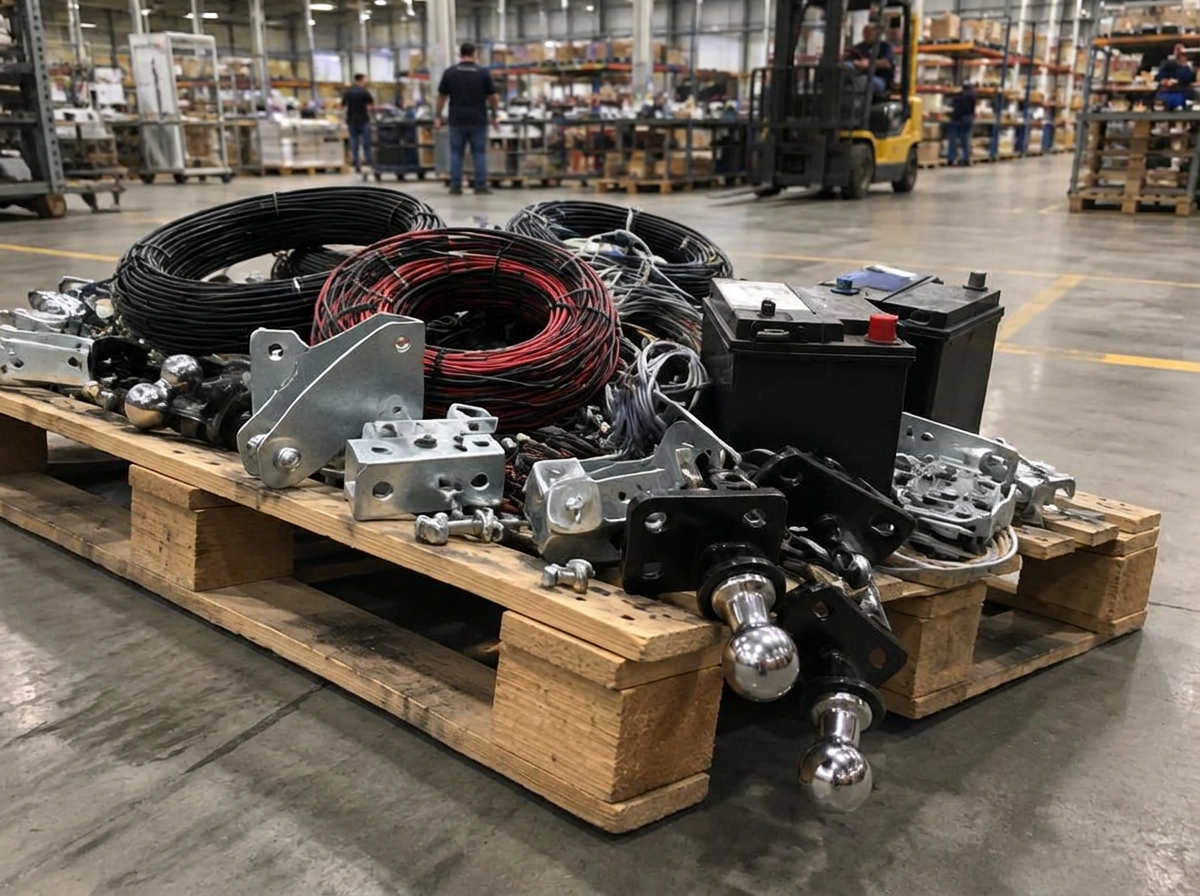
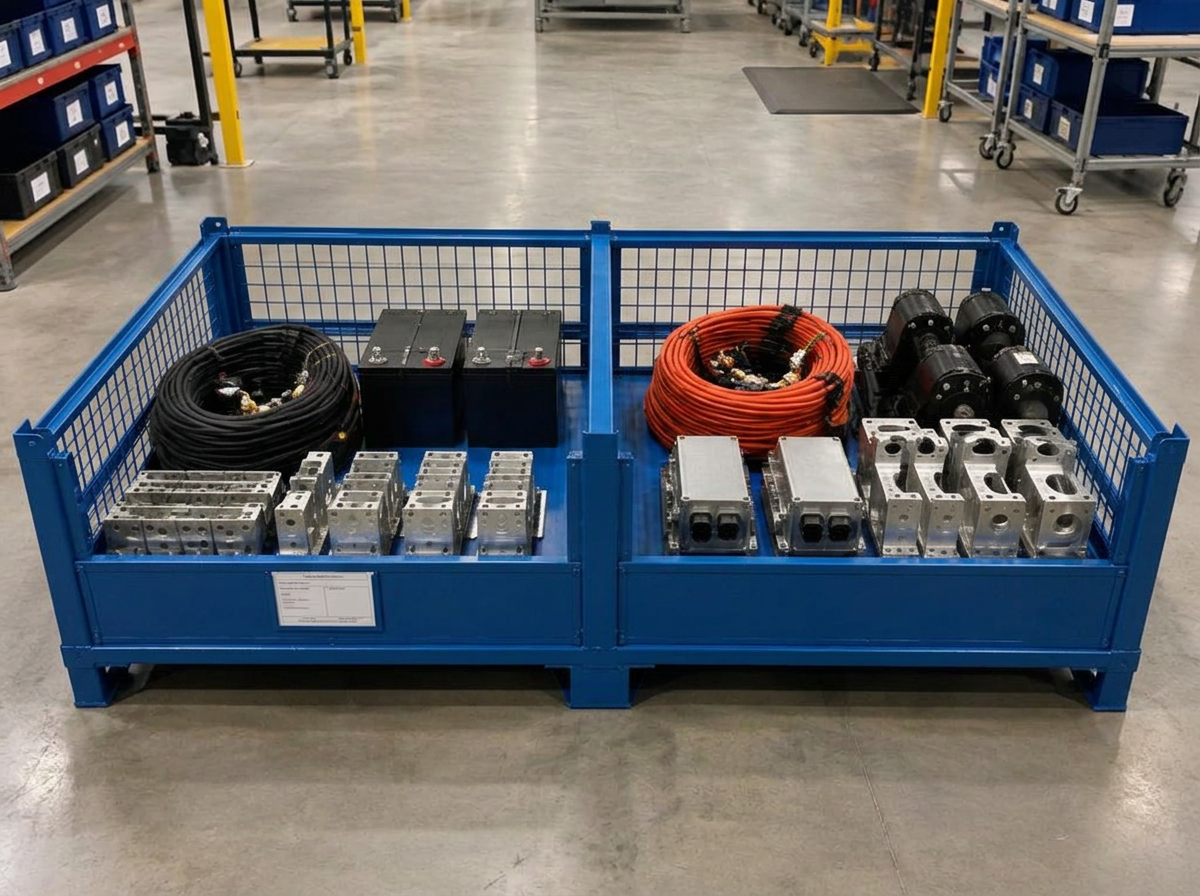
Three footprints, from loose parts to finished goods
| Size | Footprint | Safe load | Typical use |
|---|---|---|---|
| Small | 800 × 600 mm | 500 kg | Loose parts, fixings, small sub-assemblies, tooling trays |
| Medium | 1,200 × 800 mm | 1,000 kg | Job kitting, batch WIP, machined components, change-over kits |
| Large | 1,600 × 1,200 mm | 1,500 kg | Four-post stillages, heavy sub-assemblies, finished goods, dispatch |
Production storage questions we get asked
Tell us what a typical job looks like and how it moves through your line. We size the stillage around your process, not the other way round.
How do stillages streamline a manufacturing line?
Stillages kit every part for a job into one cage and deliver it to the cell complete, so operators build instead of hunting for parts. Change-over tooling arrives with the job, work in progress stays countable between stations, and empties fold flat for the return loop — less walking, less searching, fewer stoppages, and a leaner, faster line.
How do stillages save time on a production line?
Every part for a job is kitted into one cage and delivered to the cell complete. Operators build instead of hunting for parts, change-over tooling arrives with the job, and work in progress stays countable between stations — less walking, less searching, fewer stoppages.
What is a four-post stillage?
A four-post stillage is a heavy-gauge steel frame with four corner uprights that lets loaded units stack on top of each other without the load touching the frame below. Loose parts sit inside on shelves or the base, and the stack stays stable up to six high.
Can they hold loose parts safely?
Yes. Mesh-sided cages hold loose machined parts, fittings and hardware where you can see and count them, while four-post stillages with shelves take heavier components. Nothing rolls off, nothing gets lost, and the whole lot moves by forklift as one unit.
How high can they stack?
Loaded stillages interlock and stack up to six high in a store or buffer zone, so the same footprint holds six times the parts with no racking to install or bolt down.
Do they fold flat when empty?
Yes. Empties fold flat in seconds, so a trolley brings back roughly four times the cages it delivered and your floor is not full of empty frames between runs.
What finish do they come in?
Painted in a hard-wearing RAL powder coat as standard, with a heavier-duty coating available for yards and exposed plant storage.
Setting up a store or buffer zone? Compare stillages against fixed pallet racking, or see the collapsible pallet cage range.
Get stillages priced for your line
Send your part list and quantities — we quote within one working day.